
“There will be a day when authoritarians go”: The power of non-violent resistance
Written by Leila Hawkins
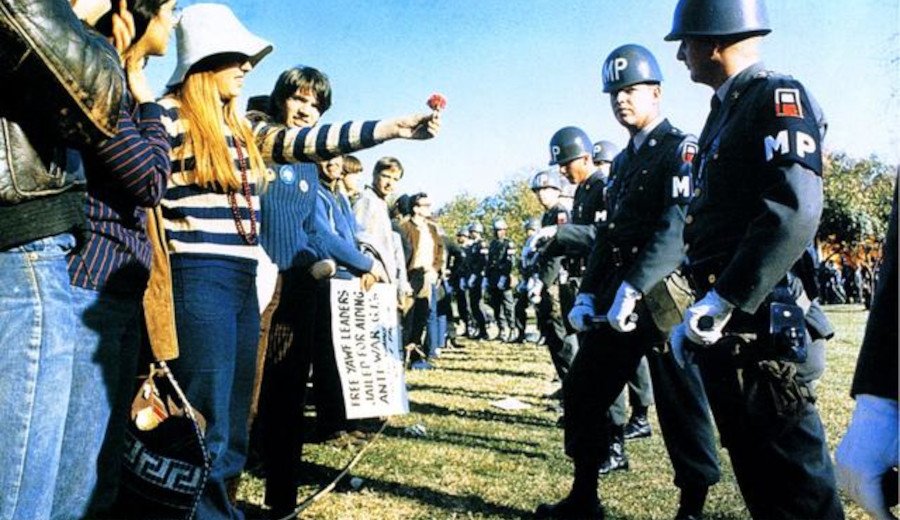
Photo of a demonstrator offering a flower to a military police officer, 1967. Source: US Department of Defense

Violence is rarely out of the headlines in the US. This year so far, there have been more than 400 mass shootings. Political activist Charlie Kirk was shot dead in September, and President Trump himself survived an assassination attempt in the run-up to the 2024 election. Meanwhile his administration is leading an aggressive campaign of deportation raids that is sweeping terror through the country’s immigrant communities.
Rivera Sun, an activist and trainer in non-violent action strategies, remains optimistic by following peaceful movements that have successfully brought about change in other parts of the world. “In the US we are trained and immersed in the rhetoric of violence,” she explains. “We spend so much money every single year on war and militarism. If you look at what’s being turned out of Hollywood for example, a lot of those movies are reinforcing the idea that violence is what heroes use, it’s how we solve our conflicts, what gets you the girl and the ride up into the sunset at the end.
“Many people don’t know that non-violent action has been proven to be twice as effective as violent campaigns, and it works with a fraction of the casualties,” she says. “We don’t learn or hear about it, and even our own history of using non-violent action is either suppressed or suspended out of the narrative.”
ICE raids and the resistance
In recent months the activities of the US’ Immigration and Customs Enforcement (ICE) agency have ramped up with such virulence that even its own former agents are stunned. Car parks, farms, and even courthouses where people attend mandatory immigration check-ins are being raided as part of the administration’s mass deportation campaign.
“The highest profile raids are happening in democratically held cities, targeted because their mayors and their city councils and constituencies tend to vote democratic,” Sun explains. “We’re seeing this in Los Angeles, in Washington DC and in Chicago, and there have been threats to roll it out to Portland, Memphis, New Orleans and many other cities.
“They are terrifying,” Sun says. “People get snatched off the streets, and once ICE puts you into their detention centres, they often do not give you the right to a lawyer or a phone call. These are the typical rights of citizens if they are detained by police.”
“This is the frontline of fascism in this country”
“These are specifically targeting communities that look like they would have immigrants in them. It is racial profiling — and should be illegal,” Sun adds. “The courts caved and are allowing the federal government to violate the civil rights of citizens and residents. We have had 170 citizens detained by ICE for weeks or months. Some have visas and paperwork where they’re not full citizens, but they’re completely compliant with the law. Others do not have that paperwork, and part of the reason has to do with the injustice of our immigration system, which is very hard to navigate, rife with racial discrimination.”
“It is not inaccurate to say that this is the frontline of fascism in this country,” she says.
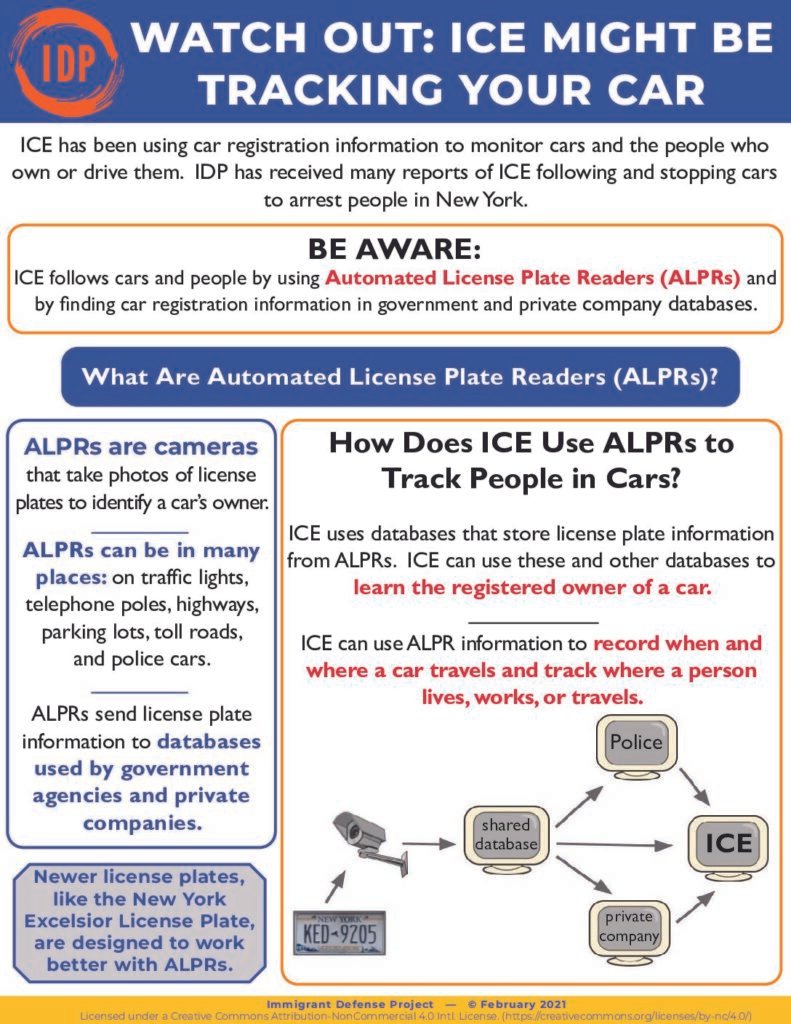
However there is a significant effort to push back with “ICE watch patrols”. “They keep an eye out for the presence of ICE agents and sound the alarm to the community, with whistles, or with bull horns in their cars,” Sun explains. “This is a warning system for anyone who is undocumented to get out of harm’s way if they can.
“There are certain limitations about where ICE can go. They cannot enter closed, private property without a signed judicial warrant. One of the tactics of resistance is training citizens and business owners in knowing their rights. And we are now seeing thousands of people across the country stand up to ICE and say, ‘You do not have the authority to enter this area. Back off. Go away.’”
People are also forming human blockades to stop ICE vehicles and gathering outside detention centres demanding to know who has been detained. Lawyers are calling for the right to inspect these centres, sometimes facing arrest themselves. “This is just scratching the surface of how people are resisting. Many of us will not stand for it,” Sun says.
The civil rights movement and the power of non-violence
The US civil rights movement offers powerful examples of what can be achieved with peaceful resistance. “There were hundreds of campaigns to desegregate buses, schools and lunch counters to win rights for African Americans,” Sun notes. “Within each of these campaigns, there were dozens of tactics. Nashville had sit-ins at lunch counters, but they also boycotted downtown stores to pressure business owners to desegregate if they wanted their businesses to survive.”
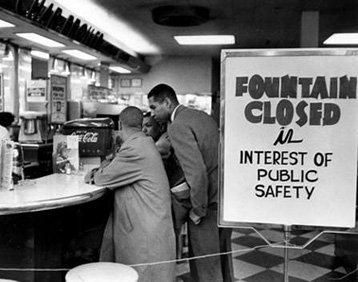
The Nashville sit-ins took place in 1960, when Black people were allowed to shop at department stores, but were barred from eating at their lunch counters. The demonstrations were led by students trained in non-violent protest by Rev. James Lawson, who used role-playing workshops to prepare them to remain calm when confronted with violence and hate speech.
When the students arrived at the counters the staff refused to serve them, but they remained seated, quietly doing homework. Over the following weeks, some were assaulted by white shoppers or arrested, but undeterred, they kept returning. Black shoppers then began to boycott the stores.
After a bomb almost destroyed the home of a leading Black civil rights lawyer, thousands of protesters including students and ministers marched silently to City Hall to confront the Mayor. Three weeks later Nashville became the first city in the South to desegregate.
“Non-violent action is a skill we need for a world of change”
“Mass protests are so visible and so easy for the news to cover, I think many of us think that’s the be-all of nonviolent struggle,” Sun says. “Actually, that’s the tip of the iceberg. We have a toolbox of more than 300 methods and we don’t just use one tactic once, like one day of mass protests. We use these tools skilfully and strategically to remove our consent, our cooperation, our time, our energy, and our money. We pull these in exchange for a demand, like workers going on strike until their boss concedes to paying them higher wages, or until an unjust system collapses because no one is participating anymore, such as the anti-apartheid boycotts that happened in South Africa.”
“Nonviolent action is as vital a skill as knowing how to drive a car,” she says. “This is a skill that we need for a world of change.”
The hidden work powering change
Activist movements have multiple components, many of which happen behind the scenes. The Montgomery Bus Boycott of 1955 gained widespread attention when Rosa Parks refused to give up her seat for a white passenger and was swiftly arrested. It was this protest that propelled Dr Martin Luther King to national prominence, after addressing almost 5,000 people in a now-famous speech urging non-violence and declaring, “The only weapon that we have in our hands this evening is the weapon of protest.”
Outside of the spotlight, supporters organised carpools and collected shoes to replace the footwear of people who chose to walk rather than riding the city’s racially segregated buses. “The bus boycott was kept afloat economically because there were committees of bake sale ladies,” Sun says. “If you are not a public speaker like Dr King was, or you can’t risk arrest like Rosa Parks, maybe you want to be the bake sale ladies, because those roles are as vital as Dr King and Rosa Parks, and we need to honour and respect that otherwise our movements won’t succeed.”
“Volunteer. Make sandwiches. Do a little outreach. If you’re a web designer, improve their website,” she adds.
In October this year, Jimmy Kimmel was suspended from the ABC network for making comments about the shooting of Charlie Kirk on his show. In response, millions of people cancelled their subscriptions to Disney’s streaming service. Kimmel was reinstated within a week.
“Successful boycotts really hinge on having a demand that you can leverage,” she says. “That’s what we saw with the boycott Disney campaign. A lot of those subscriptions are getting restarted now because they capitulated and agreed to uphold free speech.”
Hope in a time of terror
There is a tendency in the Global North to believe that every major event of political or social upheaval is unprecedented. But other regions have been overcoming authoritarianism for thousands of years.
“Our earliest recorded strike was in 1170 BC in Egypt, when tomb builders went on strike because they weren’t getting paid wages,” Sun says. “Then you have the efforts to overthrow the dictator Pinochet in Chile, and Latvia, Lithuania and Estonia’s campaigns for independence from the Soviet Union. There are so many great examples of people who have met similar conditions and moments, in many cases worse than what we’re facing right now, and used non-violent action to successfully restore democracy in their countries. I find that incredibly inspiring.”
Sun recently had a call with a group of activists from Serbia — now in their 40s and 50s, but who have been activists since their youth. “They can look at us and say, ‘we lived under dictatorship. We rose up and restored democracy’. Their country is not perfect, but they have walked through the fire, and they are here to tell us that there is life after authoritarianism. That’s something we should never take our eyes off,” she says.”
“There will be a day when the authoritarians are gone, and we will continue to push for deeper, bolder and better democracy.”

READ MORE