
Women in news: where we stand now
Written by NADJA editors
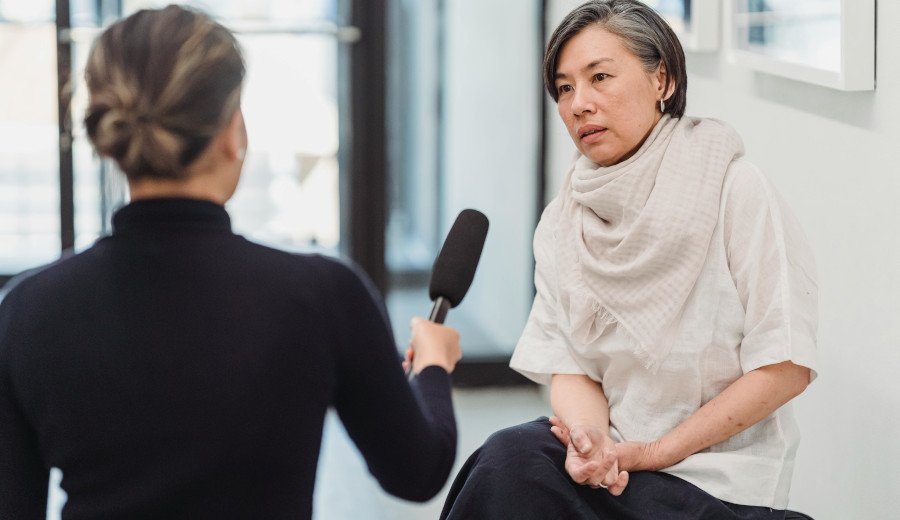
Photo by Greta Hoffman / creative licence

When we launched NADJA, we had a simple, yet bold ambition: to help change the way women are represented in the news. We kept seeing stories where women appeared primarily as victims or the “wife of” someone, and not enough where they were quoted as the expert sources.
According to the latest report by the Global Media Monitoring Project (GMMP) — the most comprehensive study of women’s representation in the media — things have hardly changed over the last 30 years, with women’s representation in the news effectively flatlining since 2010.
Women are still only featured in a quarter of all news stories despite being 51% of the population. And while digital channels initially promised to “democratise” media, the report shows that many of the same problems, like stereotyping and objectifying women, have crossed over to online sources.
If that sounds pessimistic at the start of a new year, it’s because the wider media landscape gives us reason to be cautious. A large number of feminist and women-led media platforms have shut down over the last few years, including Gal-dem, Bitch Media, The Lily, Impact and Teen Vogue, which was folded into its parent magazine, to name (unfortunately) just a few.
Women journalists around the world face threats to personal safety and targeted online abuse. According to UNESCO’s flagship report on global trends in freedom of expression and journalism, nearly 75% of women journalists surveyed have experienced online violence in the course of their work, including gender-based abuse that targets not only their credibility, but also their safety.
So, where does that leave the media landscape today? Here are a few other findings that caught our attention…
Violence against women is severely under-reported
One in three women is impacted by gender-based violence around the world according to the UN, however only 2% of news stories report on this. Even though women experience violence in disproportionate numbers, men are more likely to be quoted as the main spokespersons (24% compared to 17% of women), with women appearing more frequently as members of the public, giving personal testimonies and eyewitness accounts.
Out of the 2% of news stories covering gendered violence, only 9% report on digital abuse despite how rapidly this has risen in the last few years. In 2020, a study by Plan International showed that 58% of women have experienced some form of online harassment. With the explosion of AI tools since 2023, fueling catfishing by bots and deepfake pornographic images and videos of women, the figure is likely to be much higher in 2025.
Gender stereotypes are not being challenged
Only 3% of news stories clearly challenge gender stereotypes, a figure that hasn’t changed since 2005. The report explains this as “oversimplified beliefs about the roles, characteristics, or attributes of women and men”, and “simplistic and exaggerated portrayals of femininity and masculinity”.
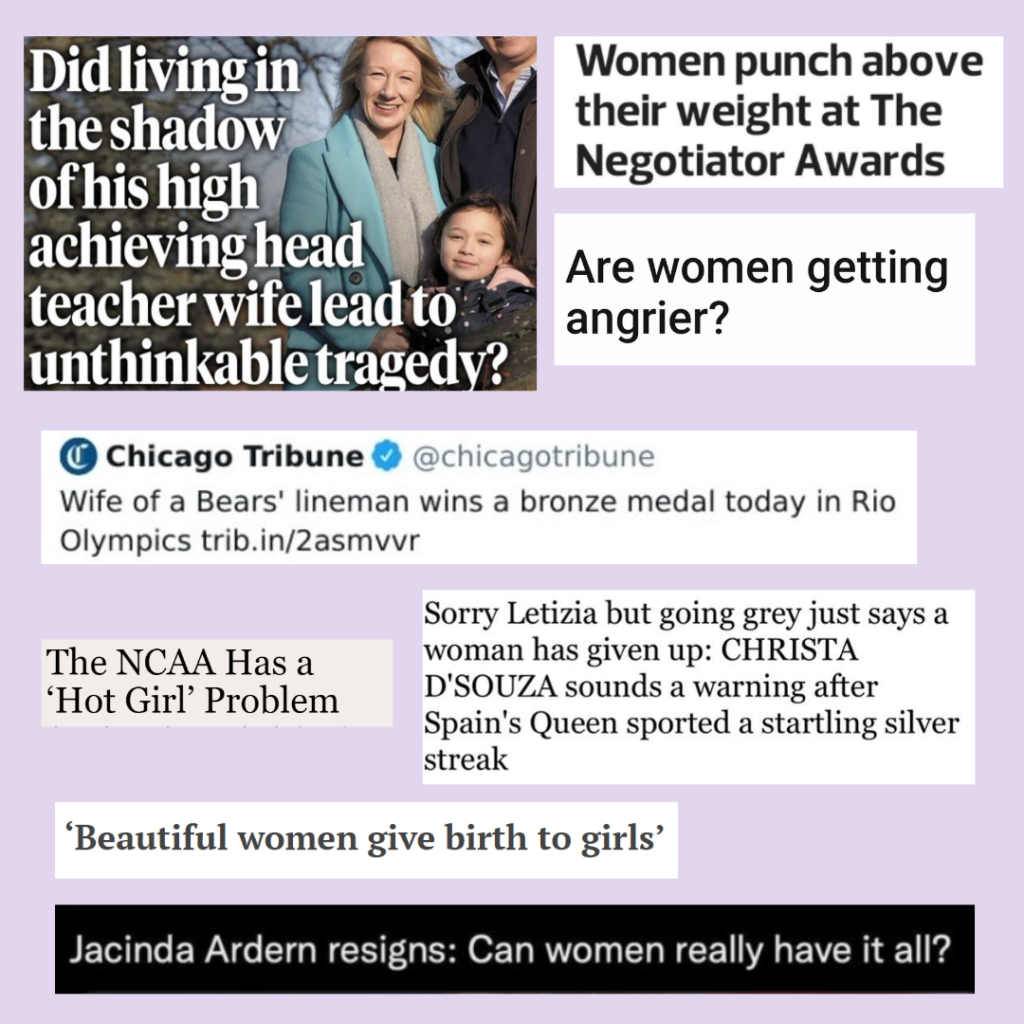
We see this in headlines where women are described as angry or vengeful, framed negatively for their professional success, or reduced to their appearance or their relationships to men.
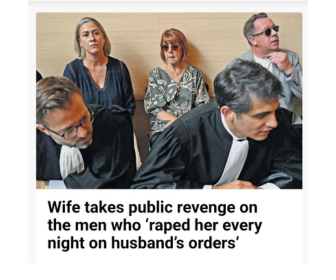
A particularly striking example appeared in a major UK publication that used the word “revenge” to describe Gisèle Pelicot’s decision to waive her anonymity in the trial against the men who raped her. The headline was later amended, but the choice of wording reflects the tendency to depict women as vindictive when they assert agency or independence.
Another common trope is describing women as homemakers or parents with no other occupation given, which happens in 73% of news stories.
Although this has decreased slightly from 81% in 2000, it shows bias remains towards defining women by domestic roles, even though this isn’t reflective of the reality with women making up around 47% of the global workforce.
Women are still more likely to be portrayed as victims
The probability of women being the central protagonists in a news story is a little higher in digital news compared to traditional news (15% vs 10%). But unfortunately, the role they are most likely to feature in is as the victim of violence or disaster – and they continue to be twice as likely as men to be portrayed as victims.
After this, women are most featured in science and health-related content, followed by social and legal stories, and the economy. Women’s visibility in political and economic news has increased significantly, by 15 points each over the past three decades. They have the lowest representation in sports coverage.
It’s not all bad: women are increasingly featured as experts (at least online)
The proportion of women featured as expert sources has grown over the decades, and this year shows the highest increase (+7 points) in digital news since 2015.
And some parts of the world have achieved gender parity in their newsrooms, with North America having the highest proportion of women reporters at 54%. The Caribbean sits at the equal mark (50%), followed by the Pacific (48%) and Latin America (47%).
The most unequal newsrooms are in Africa (20%), seven points worse than in the Middle East (27%).
Why this matters – and why we’re still here
The media influences how we understand the world around us, shaping not only what we see but how we think and act. When women are underrepresented or portrayed through stereotypes, the result is a distorted picture that reinforces gender inequality. As independent and feminist media outlets continue to shut down, these inequalities deepen, making the pool of voices that are heard and represented increasingly small.
The start of a new year often comes with new resolutions: promises to change course, try new things and do better. For us at NADJA, 2026 is not about starting over; we see it as the moment to renew our commitment: we see it as the moment to renew our commitment.
This means continuing to put women’s voices at the heart of our journalism, including those that are often left out. It means recognising that representation is not just about visibility, but about who gets to shape the narrative: who is quoted as an expert, whose experiences are treated as authoritative, and whose stories are deemed worthy of attention.
That is why we feature women as experts, commentators and contributors across politics, the economy, sport and other areas where they remain significantly underrepresented in news coverage. It is why we report extensively on all forms of violence against women globally, and why we continue to challenge the narratives that silence or stereotype.
This is where we stand, and this is our commitment to you, our readers.

You can support our work by signing up to get all our stories delivered to your inbox via the link below:
READ MORE