
Sudan’s war is wiping out healthcare, one hospital at a time
Written by Israa Elkhalil
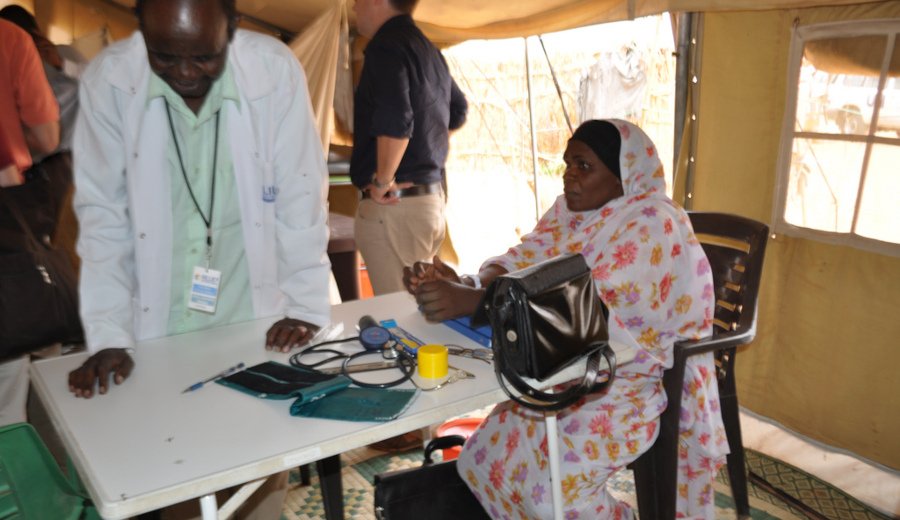
Photo: Healthcare in the Abu Shouk IDP Camp, 2009. By Sudan Envoy / CC BY 2.0

The conflict that erupted in Sudan in April 2023 triggered a rapid and catastrophic collapse of the country’s health sector, compounding decades of underinvestment. More than two years into the war, the near-total breakdown of public health systems has produced a humanitarian emergency defined by mass displacement, widespread famine, and uncontrolled epidemic disease. Sudan’s public health infrastructure has crumbled under the weight of sustained violence.
The collapse of healthcare facilities has been widespread and severe. An estimated 70 – 80% of health facilities in conflict-affected regions are no longer functioning. Major medical complexes in Khartoum have ceased operating after extensive damage, looting, and the flight of staff. A small number of facilities, such as Al Nao Hospital in Omdurman, remain nominally operational, sustained by individual doctors and nurses working with minimal supplies. Their continued operation reflects extraordinary personal endurance in the absence of a functioning health system.
The destruction of Sudan’s healthcare system reached a devastating escalation in North Darfur in late October 2025, when El Fasher — the region’s last major city — fell after months of siege. During the offensive, Saudi Maternity Hospital, the final partially functioning referral facility, was attacked. More than 450 patients and companions were reportedly killed. The assault underscored a grim reality: medical facilities and health workers have become direct targets of the war.
A cascade of epidemics
This collapse is now driving a cascade of epidemics across the country. Sudan is facing a historic cholera outbreak, with more than 120,000 suspected cases and over 3,300 associated deaths recorded nationwide by October 2025. At the same time, dengue fever has surged sharply. Since July 2024, more than 22,000 suspected cases have been reported, particularly in Khartoum, Al Jazirah, and Kassala. The destruction of sanitation systems, widespread water contamination, and overcrowded displacement sites have created ideal conditions for disease transmission, compounding already severe and persistent malaria outbreaks.
Beyond infectious disease, the war has wiped out decades of scientific and medical capacity. The Mycetoma Research Centre in Khartoum — the world’s only specialised facility dedicated to this neglected tropical disease — has been destroyed. Its loss erased more than 40 years of biological samples, clinical records, and irreplaceable research data, dealing a major blow to both Sudan’s health system and global public health efforts.
Disrupted supply chains have cut access to essential chronic medications, including insulin and hypertension drugs, contributing to a largely unrecorded rise in deaths from non-communicable diseases. This collapse has left a man living with diabetes in one residential area in Sudan rationing insulin that expired more than a year ago, as it is the only supply he can access.
The world’s largest displacement crisis
Sudan’s health catastrophe is inseparable from the world’s largest and fastest-growing displacement crisis. More than 12.8 million people have been forced from their homes since the war began. Displacement continues to accelerate beyond Darfur. On December 10, at least 330 people fled Kadugli in South Kordofan toward Al-Rahad and Sheikan localities in North Kordofan. These movements are pushing civilians into areas with little or no functioning health infrastructure, sharply increasing the risk of disease outbreaks and preventable deaths.
The impact on maternal and newborn health is already measurable. In Al-Qadarif State alone, at least 109 women and 256 newborns died during childbirth in 2025, out of more than 43,000 deliveries. These deaths reflect the absence of skilled birth attendants, basic medical supplies, and referral systems across large parts of the country. More than two million babies have been born during the war without reliable access to essential obstetric care.
Behind these numbers are health workers forced to improvise under extreme conditions. Fatima, a midwife now working in a displacement camp near Gedaref, delivers babies on plastic sheets with almost no medical supplies. “I used to work in a hospital,” she said. “Now I pray with every delivery that the mother survives.” Across conflict zones, volunteer health workers are using empty plastic bottles as urinary catheters and relying on messaging groups to exchange or barter for medicine. These scenes reveal a depth of health system collapse that community resilience alone cannot absorb.
The crisis in Sudan exposes two interconnected realities. Armed actors have repeatedly attacked health facilities, health workers, and the systems that sustain civilian life. At the same time, international engagement has failed to match the scale and urgency of the emergency. Diplomatic pressure has been inconsistent, humanitarian access remains constrained, and funding continues to fall far short of what is required.
Without immediate action to protect medical facilities, restore basic services, and ensure sustained access to care, deaths will continue to rise — largely unseen — accelerating the erasure of Sudan’s health system and the lives it was meant to protect.
This article was produced as part of ‘How to write for impact’, a training and mentorship programme created by NADJA Media for members of Politics4Her, a feminist youth-led digital platform advocating for the inclusive participation of young women in leadership. To find out more about our training opportunities, email training@nadja.co

READ MORE