
West Bank women face fear and isolation as violence hits two-decade high
Written by NADJA editors
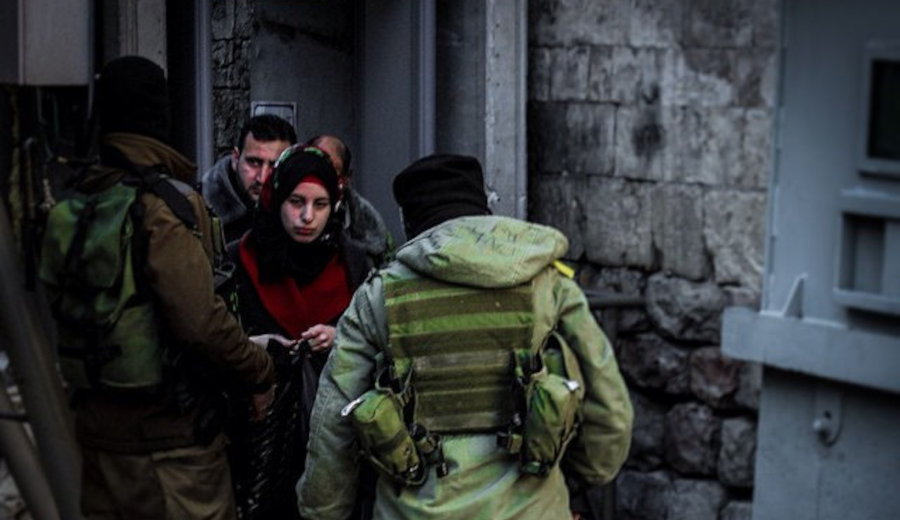
Photo: Israeli forces conduct checks at a checkpoint in Hebron. By CPT Palestine / CC BY 2.0

- Military operations and settler attacks in the West Bank have reached a two-decade high.
- Killing of thousands of men leaves women as heads of households, facing violence and displacement
Women in the occupied West Bank fear violence and arrest as settler attacks, military operations and movement restrictions have reached a two-decade high, UN Women said on Tuesday.
Analysis published by UN Women on September 15 stated that there were 925 movement obstacles across the occupied West Bank, including staffed checkpoints, road barriers and trenches. This is 43% higher than the annual average over the previous 20 years.
Women who were interviewed said checkpoints made travel feel unsafe, while more than half said movement restrictions block them from reaching work, collecting aid, accessing healthcare and moving their families to safety, according to the UN agency.
The findings come as violence in the West Bank has risen sharply. More than 1,600 attacks by Israeli settlers resulting in Palestinian casualties or property damage were recorded between January and August this year, according to the UN Office for the Coordination of Humanitarian Affairs (OCHA).
Earlier this year, the head of the UN Human Rights Office in the occupied Palestinian territory reported on these violations of international law, which include atrocity crimes. “Settler attacks are routinely carried out with the support, acquiescence, or participation of Israeli security forces,” Ajith Sunghay said. “The Israeli government has intensified the militarisation of the settler movement, shielded them from accountability, and now actively benefits from settler violence as a catalyst for its stated annexation agenda.”
More than a thousand Palestinian men and boys in the West Bank have been killed by Israeli security forces between October 2023 and January 2026 and tens of thousands have been detained. This has left thousands of women suddenly responsible for earning an income while caring for their families and keeping them safe from the conflict.
“Behind every one of these figures is a family in grief: a mother waiting for news of her son, a wife left without her partner, and children facing immense loss,” said UN Women Chief of Humanitarian Action, Sofia Calltorp. “For women who are suddenly left heading households, they must find ways to earn an income, secure assistance, and protect their families under conditions that make even the most basic responsibilities extraordinarily difficult. They face heightened risks of poverty, exclusion, and violence.
“The consequences are severe. Women responsible for feeding their families, securing assistance, and meeting basic needs are being prevented from moving freely to reach food, aid, essential services, and employment. This is restricting their mobility, and undermining their safety, well-being, and ability to keep their families afloat.”
Women are increasingly responsible for families
UN Women estimates that around 83,200 households in the occupied West Bank are headed by women, representing about one in eight households. The agency said the figure was likely to be an underestimate.
According to their data, 82% of women formally recognised as household heads are responsible for managing household income, while 77% are also responsible for childcare. At the same time, 75% make all decisions relating to household members’ safety.
Settler violence has also become a key driver of displacement, with women-headed households more likely to have been displaced – 40% no longer live in their original homes compared with 30% of households headed by men. Displaced women-headed households report being unable to meet basic needs, with insufficient access to cash, food, clothing, hygiene supplies, and shelter needed for survival, alongside heightened fears of violence and security concerns for their children.
“Half of women heading households told us that they are skipping meals to cope with food shortages,” said Calltorp. “Two thirds said they are taking out loans to make ends meet, making any recovery much harder to reach.”
Fear of gender-based violence
Women navigating checkpoints, collecting humanitarian assistance or moving through public spaces were disproportionately exposed to harassment, intimidation and the risk of gender-based violence. These abuses have been documented as part of the pressure forcing Palestinians from their homes.
One in five women heading households reported fearing gender-based violence, more than double the rate among women living in male-headed households.
“We found that fear for one’s safety and security is everywhere,” said Calltorp. “Three-quarters of Palestinians that we spoke to told us that they do not feel safe in their daily life. Half told us that the security of their children is of great concern. Fifty-seven per cent of women heading households told us that they were afraid of being arrested.”
Women-headed households struggle to meet basic needs
One in four women-headed households receives no humanitarian assistance, according to UN Women, compared with nearly half of male-headed households.
Among those receiving assistance, cash remains the largest unmet need. More than half of women-headed households with a member suffering from chronic illness reported unmet cash needs.
The analysis also reports that more than a quarter of women heading households have a disability. UN Women says these vulnerabilities reduced households’ ability to generate income while increasing their need for care, medicines, transport and health services.
UN Women has called for an immediate end to violence, movement restrictions and home demolitions in the occupied West Bank. Dedicated support should be given to women-headed households, including disability-inclusive assistance combining livelihoods, social protection, health, shelter and protection services, it said.
“Despite the immense suffering imposed on them, Palestinian women continue to show extraordinary strength, leadership, and determination,” said Calltorp. “We call on the international community to stand with them in strength and in leadership to protect civilians, respect international law, ensure freedom of movement for people to go about their daily lives, and ensure accountability for the violence.”s to their legislation. In 2024 France enshrined the right to abortion in the French constitution, the first country in the world to do so. Ireland, where it was previously banned, now allows abortion on request up to the 12th week of pregnancy following a 2018 referendum.

READ MORE